Can Artificial Intelligence Outdesign Human Creativity? A Critical Examination of AI-Generated Business Logos
A Critical Examination of AI-Generated Business Logos
Introduction
There is a paradigm shift in the world of branding and visual identity, which was formerly taken as the prerogative of highly-trained human designers. With the growing prevalence of generative AI in the creative industry, there is hardly a professional task that does not seem vulnerable to the encroachment of intelligent algorithms. It is no longer a question of whether AI has the ability to execute creative work or not, but how good it is at it as compared to a human professional.
In order to push the limits of this creative boundary, a new study narrowed down to the most basic aspect of any business, the logo. Based on a sophisticated generative algorithm, namely Chat GPT 5, which was selected due to its proven applicability to the current visual task, researchers organized an experiment to find out whether an artificial intelligence might generate branding materials that would be more popular than those designed by human designers among the general population.
The premise was straightforward: provide an AI and a human designer with the same brief to design three fictional companies, then have more than a thousand individuals select a winner. The pre-release results are impressive, which points to the fact that in the case of the mass market, the algorithmic touch is, seemingly, already taking the upper hand. The populace is apparently often selecting the logo that is created by the machine.
Experiment methodology
The method of research was well designed to bring about the playing level, and it addressed three different business concepts that would attract as many people as possible. The hypothetical companies were all small, familiar, and inexpensive businesses, the companies that a common individual can easily imagine as starting businesses, or even the type of company that they patronize quite often. This was a purposeful selection in order to make sure the results of the survey were not influenced by niche or too technical industries, but rather broad public taste, regardless of gender, age, and background.
The three imaginary companies were:
- Lumina Beauty: A professional beauty studio specializing in clean, luxurious, and reliable skincare and cosmetic services (see Figure 1).
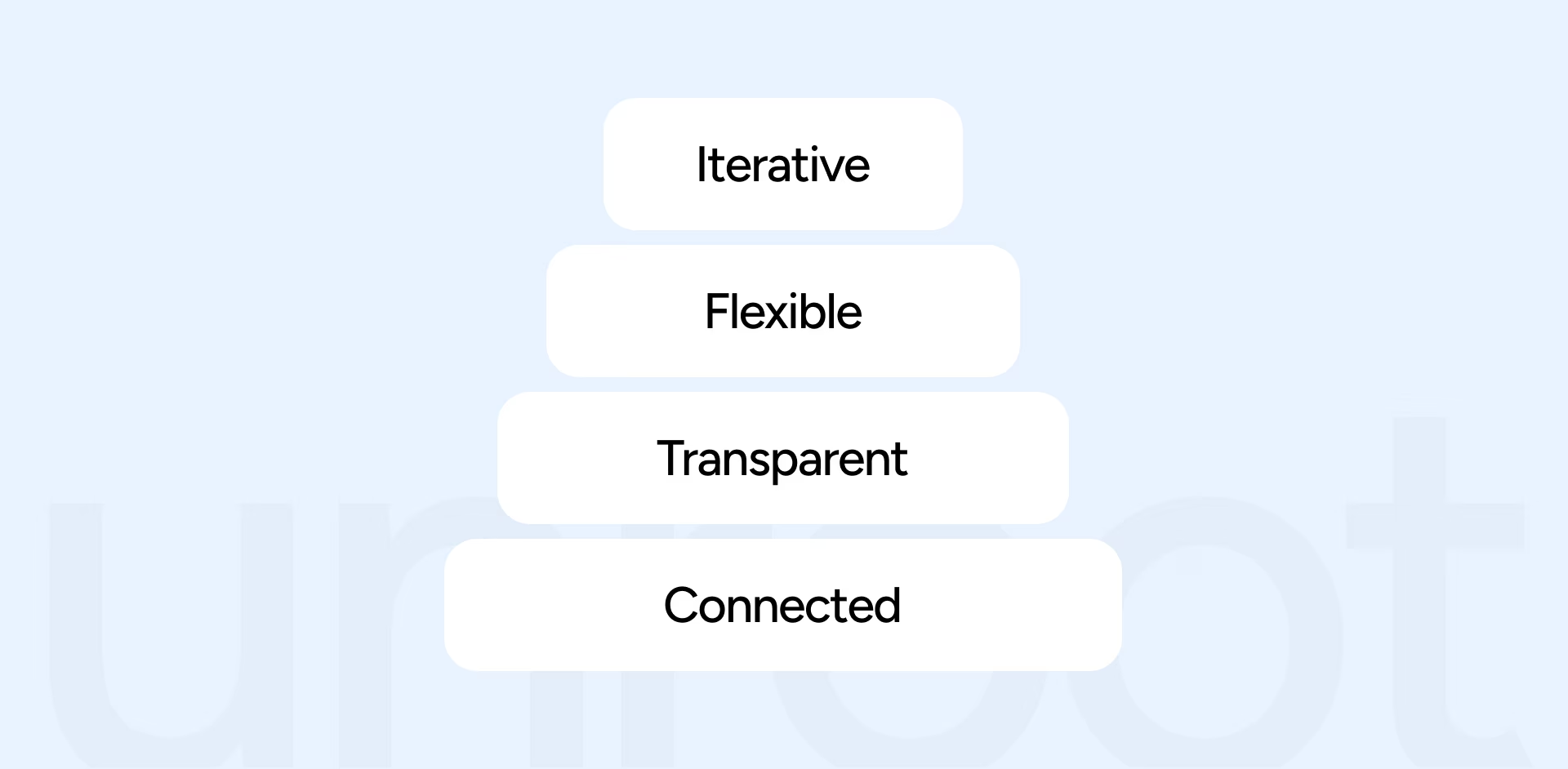
Figure 1. Lumina Beauty logo design brief
- UNLOK: A streetwear brand based on the concepts of access, disruption, and digital subversion, which needs a monochrome, industrial identity (see Figure 2).
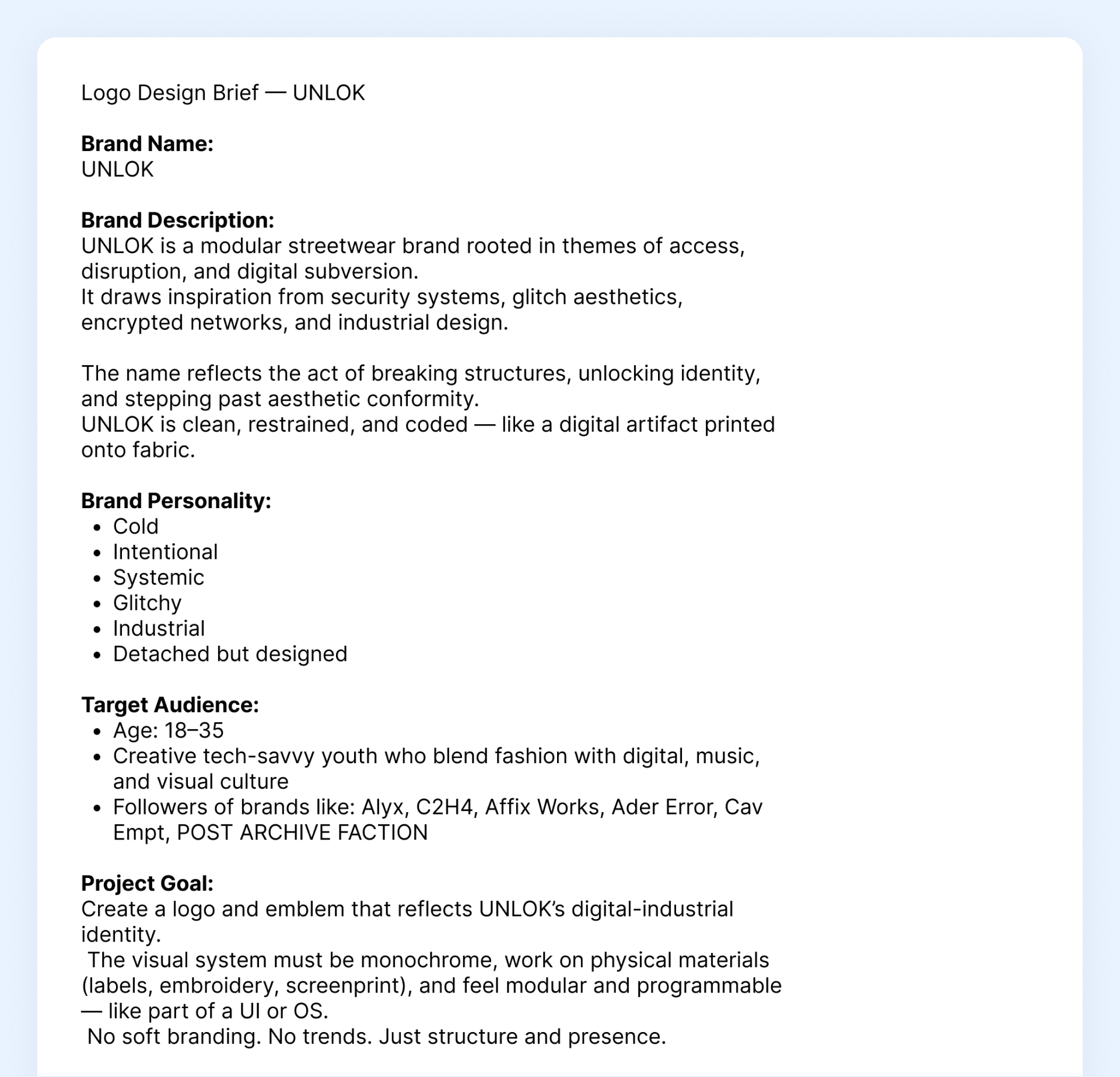
Figure 2. UNLOK logo design brief
- Canopy Cafe: A contemporary restaurant brand that combines contemporary image and a feeling of tradition and relaxation (see Figure 3).
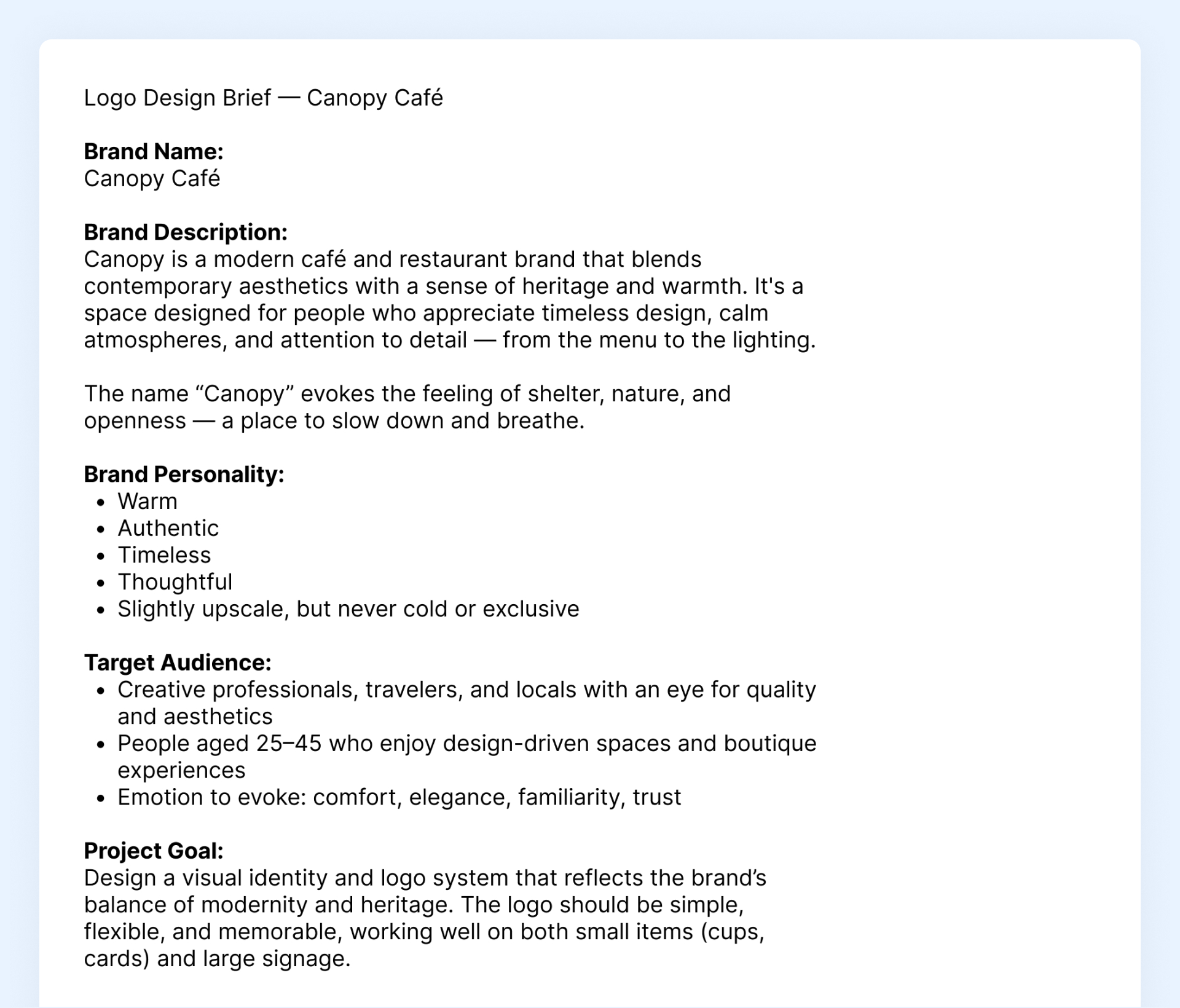
Figure 3. Canopy café logo design brief
The Human and the Machine
In the case of the AI challenger, scholars selected ChatGPT 5 as the generative engine. The current model was chosen due to the fact that, at the moment of the experiment, it was generally considered the most appropriate and the most powerful tool in the creation of complex visual identities that are currently available, providing a high level of control and an advanced syncretism of output generation. Each company supplied the AI with the complete and comprehensive creative brief.
The human factor was given by the outsourced but not elite designers. The key limitation of the research is that the human-made logos have not been developed by the best professionals or artistic directors of the famous agencies. Rather, middle managers were appointed. The researchers admit that, under the circumstances, the human designs would have been quite different if they had been designed by true and highly specialized industry leaders. This arrangement, though, gave a viable comparison: AI and the type of professional that a small business would possibly hire.
Then the competition was established: three sets of logos, one artificial intelligence, one human, both referring to the same creative task.
The Results: Preference and Public Opinion
After the design stage, a mass preference poll was introduced, and more than one thousand people were asked to respond to it. In each case, the human and AI logo was displayed to the respondent side-by-side, and without knowing which one was which, they were asked to simply answer: Which logo do you prefer? (see Figure 4).
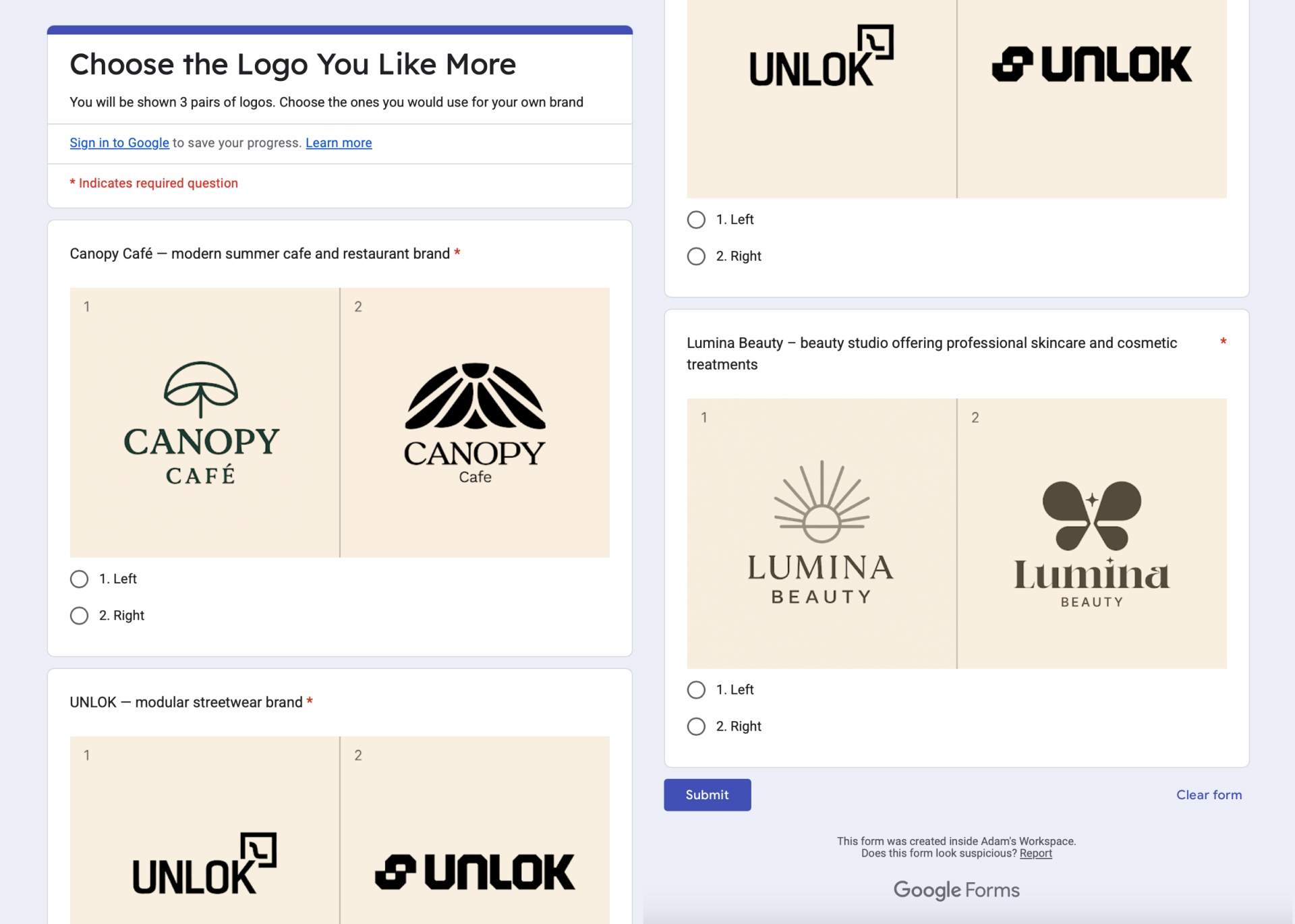
Figure 4. Survey for the best logo
In two of three classes, the preliminary data were overwhelmingly in favour of the algorithmic designs.
Lumina Beauty (Skincare Studio)
The scores of Lumina Beauty, which demanded a sense of cleanliness, reliability, as well as soft sophistication, were also very clear. 63.6% of the population favored the AI-generated logo (the logo on the left) (see Figure 5). This inclination underscores the fact that the AI addresses briefs that focus on contemporary, minimalist, and luxury-related designs- an omnipresent trend in modern-day branding.
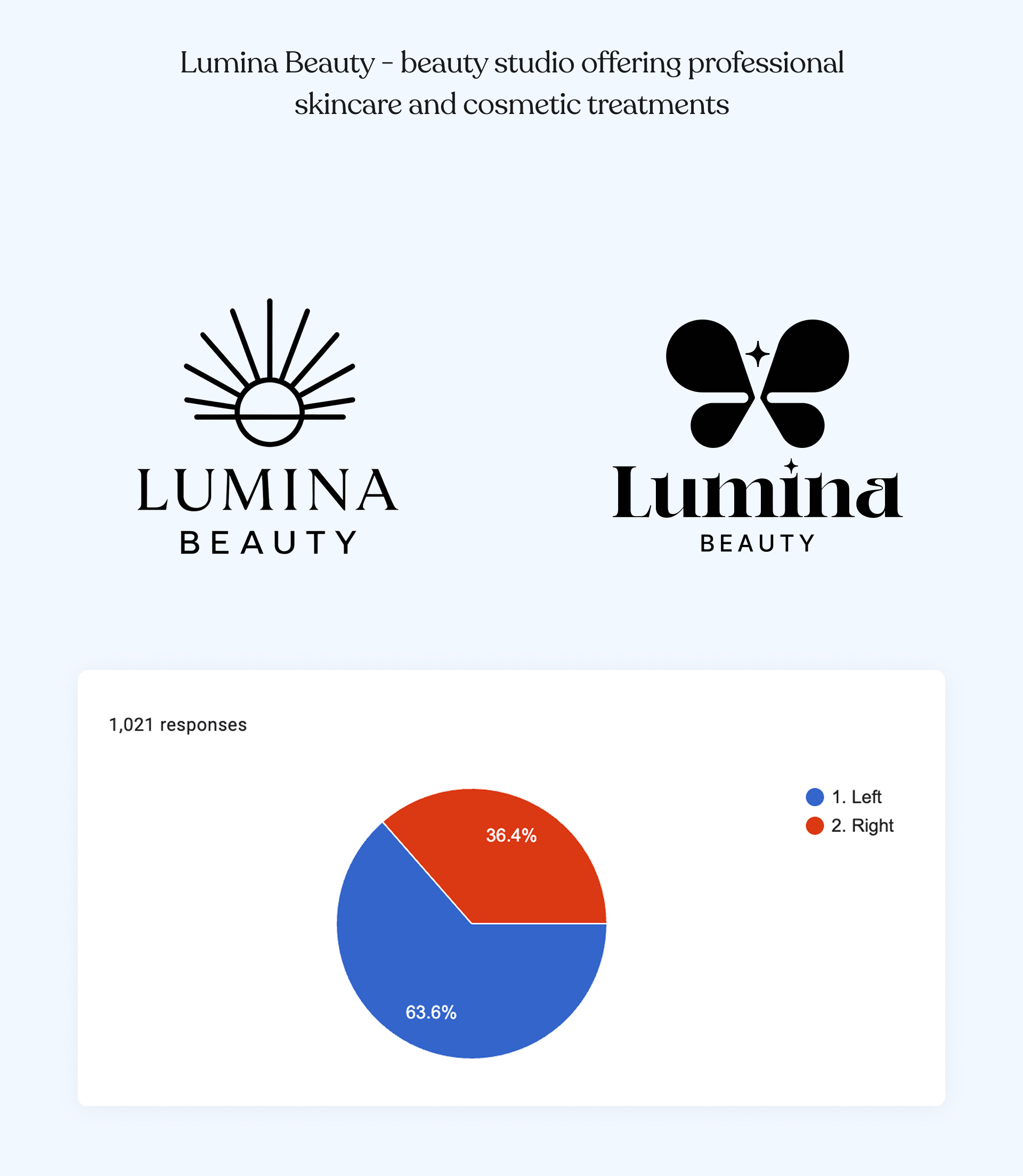
Figure 5. Survey Results for Lumina Beauty
UNLOK (Modular Streetwear)
The deviation that happened in the overall trend was only in the case of the UNLOK brand. It was the most conceptually oriented, niche brief, requiring monochrome and an industrial appearance with the themes of digital subversion. In the case of this brand, the logo created by humans (the logo at right) was overtaking, which was selected by 58.8% of the respondents (see Figure 6).
The given outcome provides a crucial element of subtlety: although AI is quite good at rendering such mass-market aesthetics (Cafe, Beauty), the intricate nature of the concept and the perception of a niche subculture is the key to interpretation and implementation, which could still benefit the human designer crucially.
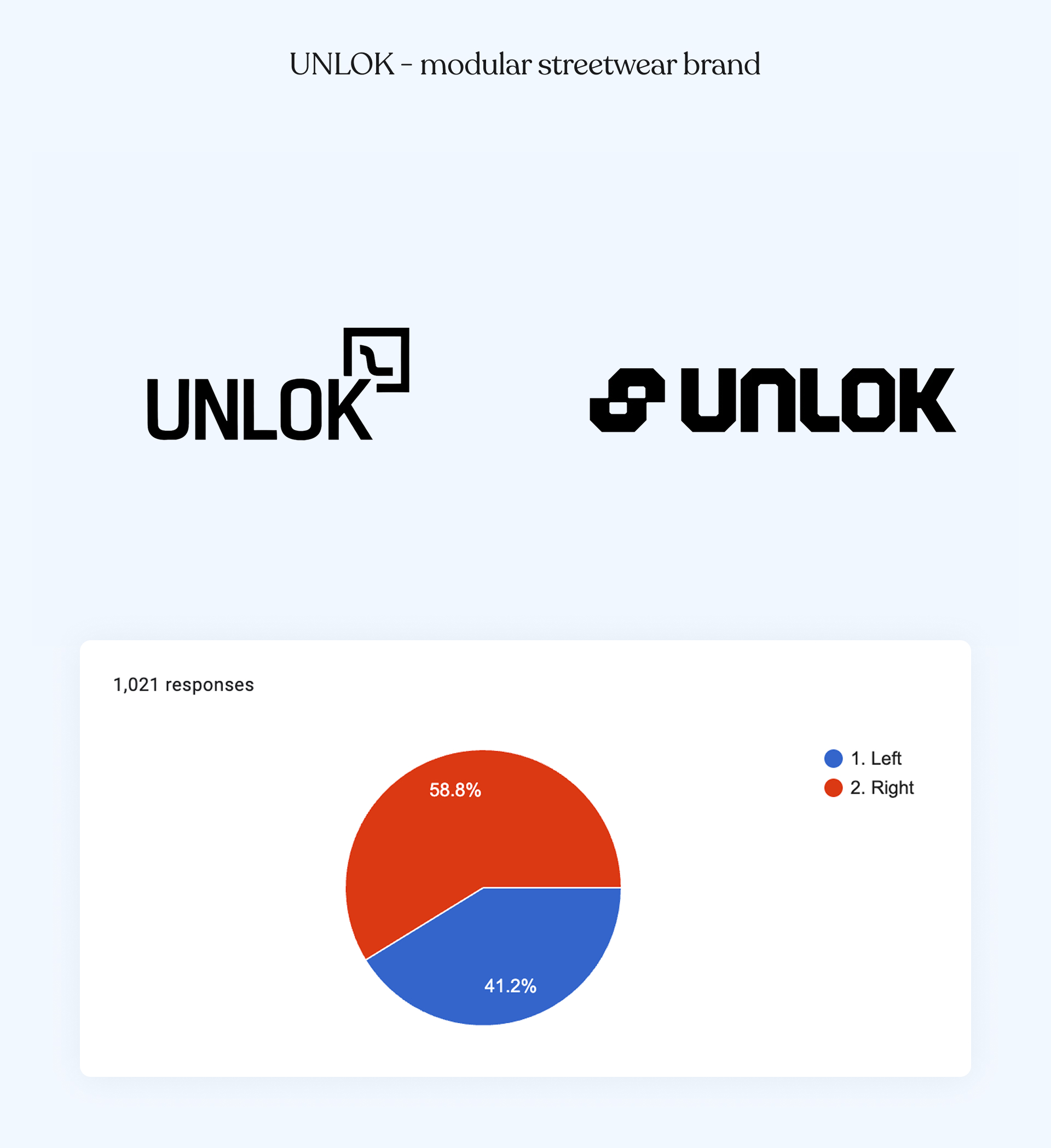
Figure 6. Survey Results for UNLOK
Canopy Cafe (Modern Cafe)
In the case of the Canopy Cafe brand, where a warm, old-fashioned, and classic image was needed, the AI-created one became the obvious choice. The overall result was that 68.8% of the respondents liked the logo developed by ChatGPT 5 (the logo on the left) (see Figure 7). This implies that in a typically perceived business category where it is necessary to have an aesthetically attractive, accessible identity, the AI model was able to strike the right chord in the market.
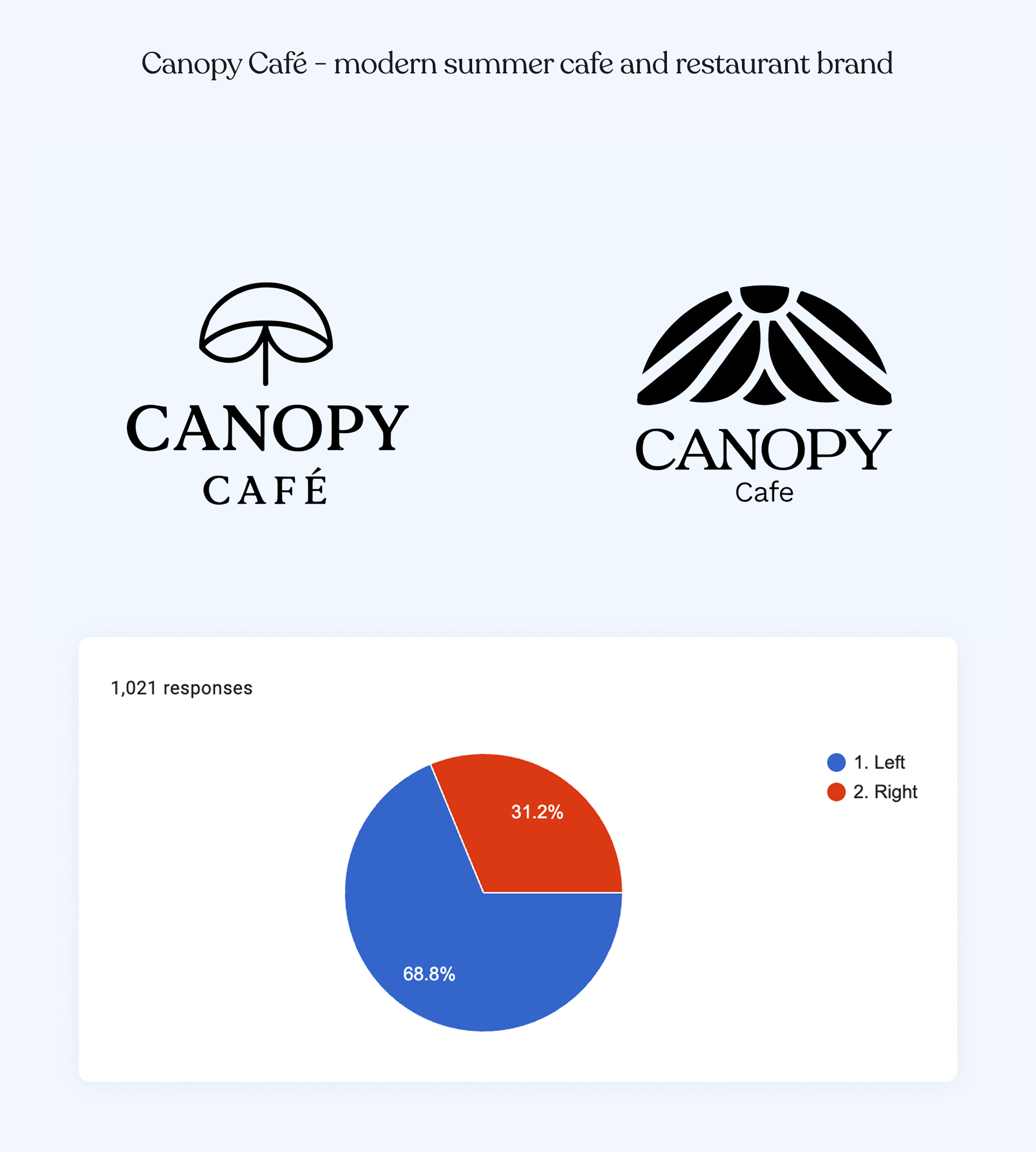
Figure 7. Survey Results for Canopy café
The Nuance: Considering the Context and Scale
Although the early indications of the larger population liking the aesthetic output of AI, the researchers do not hesitate to stress the limitations and the circumstances under which the results are obtained. This is aimed at producing a knowledgeable dialogue rather than establishing a clear winner in the human-AI battle.
To start with, the poll, which has also been a considerable one with its 1,000-plus participants, should be seen in a statistical perspective. The research is categorical in stating that a survey of this magnitude might not have the same results should the sample be increased to one million or even a billion citizens. Popularity is a dynamic thing, and although the trend proposed here has been confirmed, the question of whether it is universal has not been established yet. These findings can be regarded as a strong signal of the current aesthetic tendency of the market instead of a final determination of quality.
Secondly, the place of the human designer cannot be downplayed. As noted, the human logos were designed by the middle-level designers and not the creative elite of the industry. There is a wide disparity between an average designer and a world-renowned professional with decades of knowledge, experience, and unique conceptual prowess. When an internationally acclaimed design master is pitted against ChatGPT 5, the result could be drastically different, especially on short-term briefs where the level of originality or strategic thinking is extreme.
Third, the success of the AI is mostly aesthetic and trendy, and not strategic brand equity. AI is good at pattern matching and offering clean and high-fidelity results that meet the surface demands of the brief. What it lacks is the human capacity for:
- Forecasting market shifts five years in advance.
- Understanding and mitigating legal or cultural risk.
- Attaching an authentic, emotional story to the mark, the intangible elements that turn a logo into a lasting brand icon.
This study confirms that AI can provide aesthetically competitive work that will appeal to the immediate mass, and this compels mid-level designers to either adapt, focusing their work on specializing in unique conceptual work (such as the UNLOK example), or adopt AI in their own working process to improve their productivity.
When comparing the findings of all three business categories, it was apparent that the general inclination was toward the AI-generated logos, with 57.9% of the respondents being more inclined toward the algorithmic creation compared to 42.1% who leaned toward the human-created logos. These numbers offer a striking overview of the current state of competitiveness of AI in logo design.
The Business Context: Why This Matters Now
This study is very timely concerning the emerging entrepreneurial environment. Today, due to the digital era, there has never been an easier time to start a business, and one of the biggest challenges can be creating a visual identity, starting with a logo that defines it (see Figure 8).
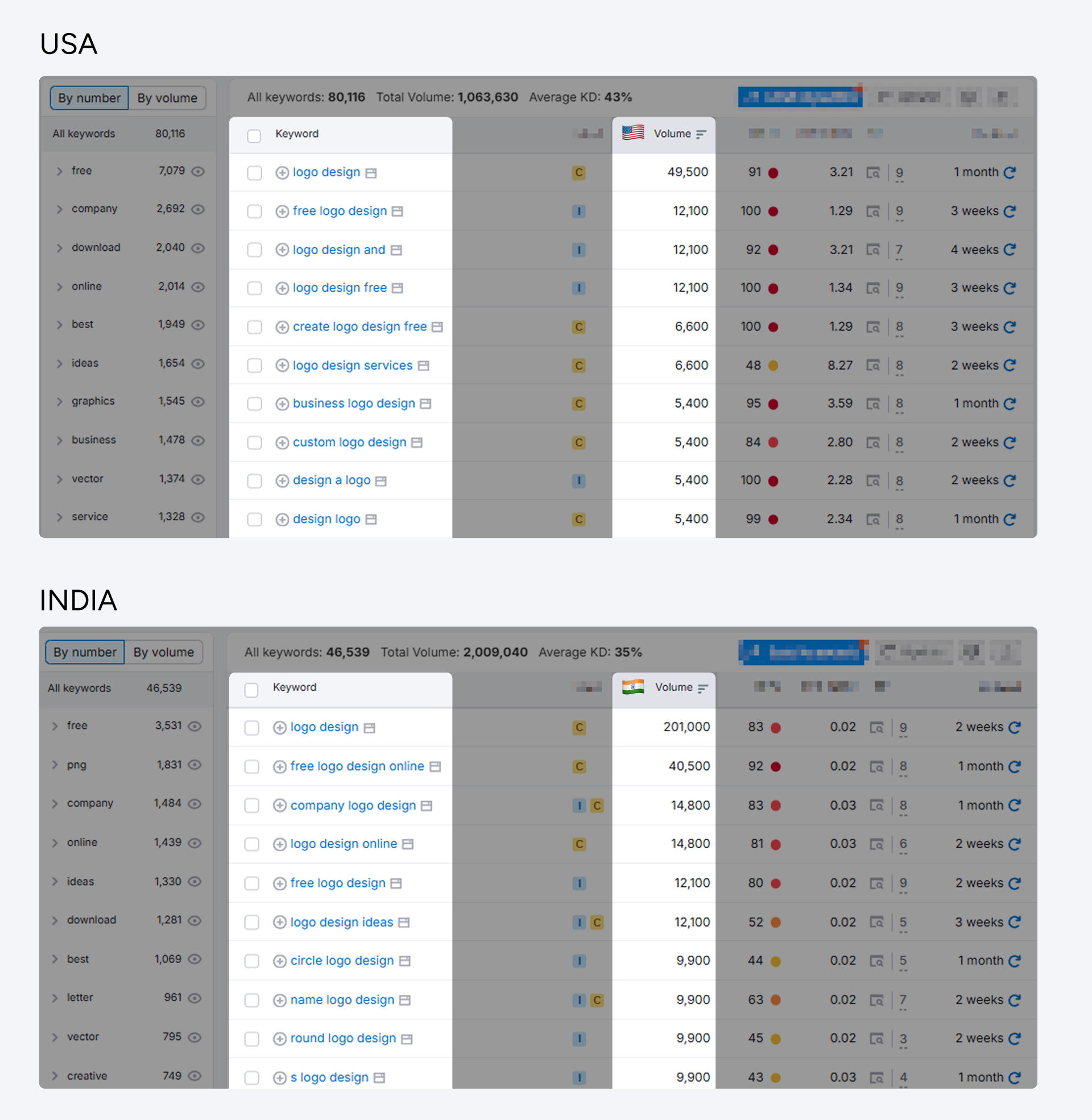
Figure 8. Monthly searches on Google in the US and India. Source:semrush.com
When an entrepreneur of an organization is starting, the decision between spending a few hundred dollars with a middle-level designer or spending a fraction of the price in several minutes using AI like Chat GPT 5 to create competitive, socially favored, and attractive options is all the clearer.
This survey shows the popularity of AI logos coupled with the sheer interest of people in the subject matter, indicating that there is a substantial market transition that has already occurred. AI is democratizing and raising the quality of aesthetic work, reducing the cost of effective branding, and exerting downward pressure on the creative services industry.
Conclusion
This research was aimed at establishing an info-entity that brings about a discussion, and it has managed to accomplish this. The research that AI-generated logos, in this case, Chat GPT 5, were more favored by more than 1,000 individuals when applied to two out of three general business ideas is an effective piece of data that cannot be overlooked by the design world.
Nonetheless, that was not the aim of the researchers to pronounce the human designer outdated. The reservations about the ability level of the human subjects and the restriction on the size of the survey of the population do not allow for generalization. Rather, this study becomes a bellwether, an indication of a pivotal point.
The AI tools are becoming unbelievably useful in performing on the intermediate level of design, the clean, trend-friendly work that comprises most of the market. The human professional should be re-priced to a higher level with more than ever emphasis placed on the challenging, abstract, and strategically rewarding work which demands sincere human compassion, intuition, and intricate problem-solving.
It is not so much a tale of replacement, but an evolution, as it requires designers to specialize, and the business world to re-establish what a valuable creative asset is in the age of the algorithm.