Webflow vs Framer in 2026: Which Platform Fits Your Website Project
Webflow and Framer are often mentioned together, but they solve different problems. The real question is what kind of site you are building and who will maintain it later.
Ease of use — Framer is easier to start, Webflow is harder but deeper
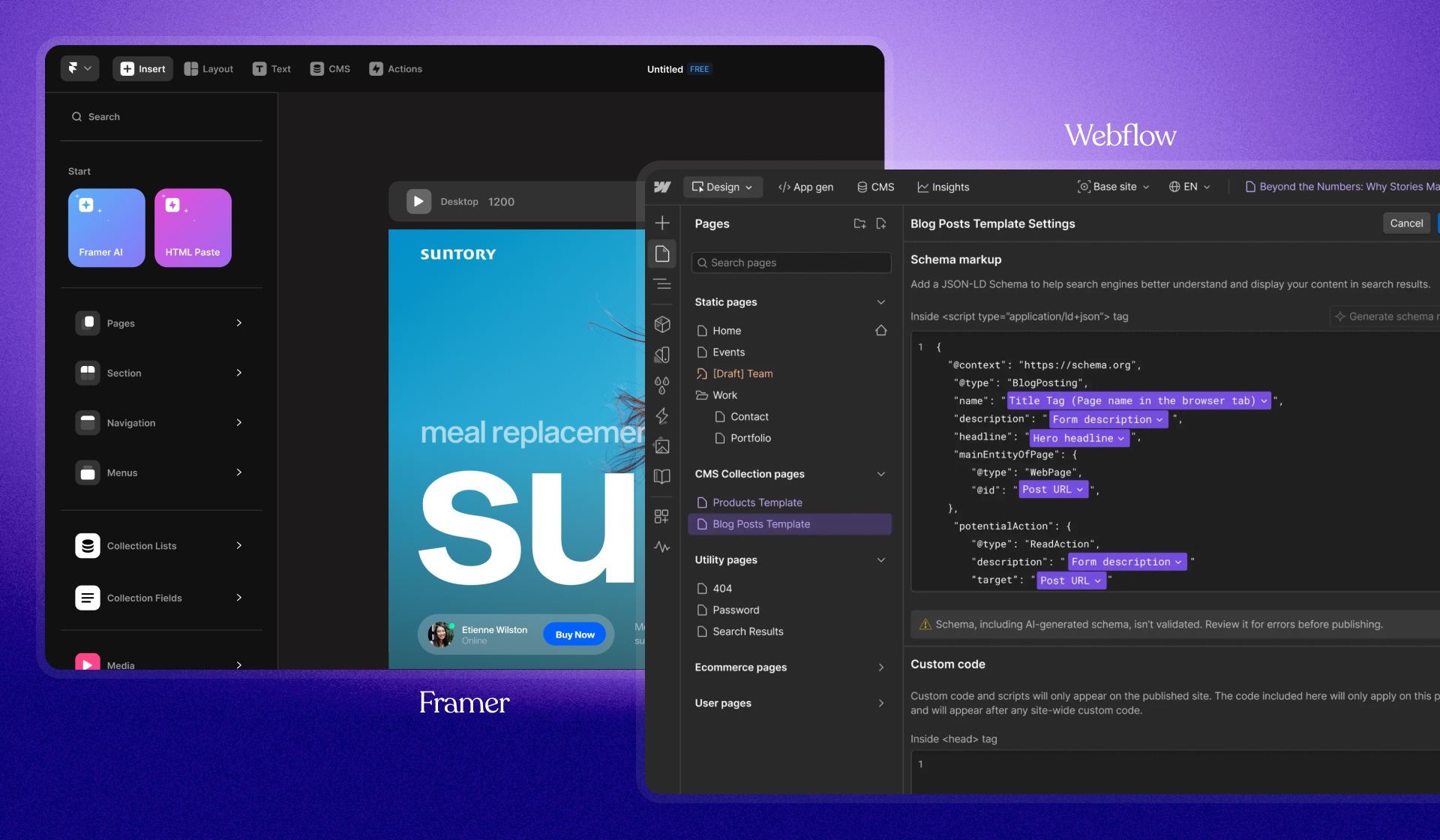
Why Framer feels easier
- Simpler interface
- No need to think about classes or divs
- Very similar to Figma
“Framer abstracts away some of the code knowledge that Webflow forces you to use.”
Why Webflow feels harder at first
- Requires understanding HTML/CSS concepts
- More controls and options
- Developer-style thinking
“Webflow feels like a faster way to write HTML and CSS visually.”
Technical flexibility — Webflow allows more complex builds
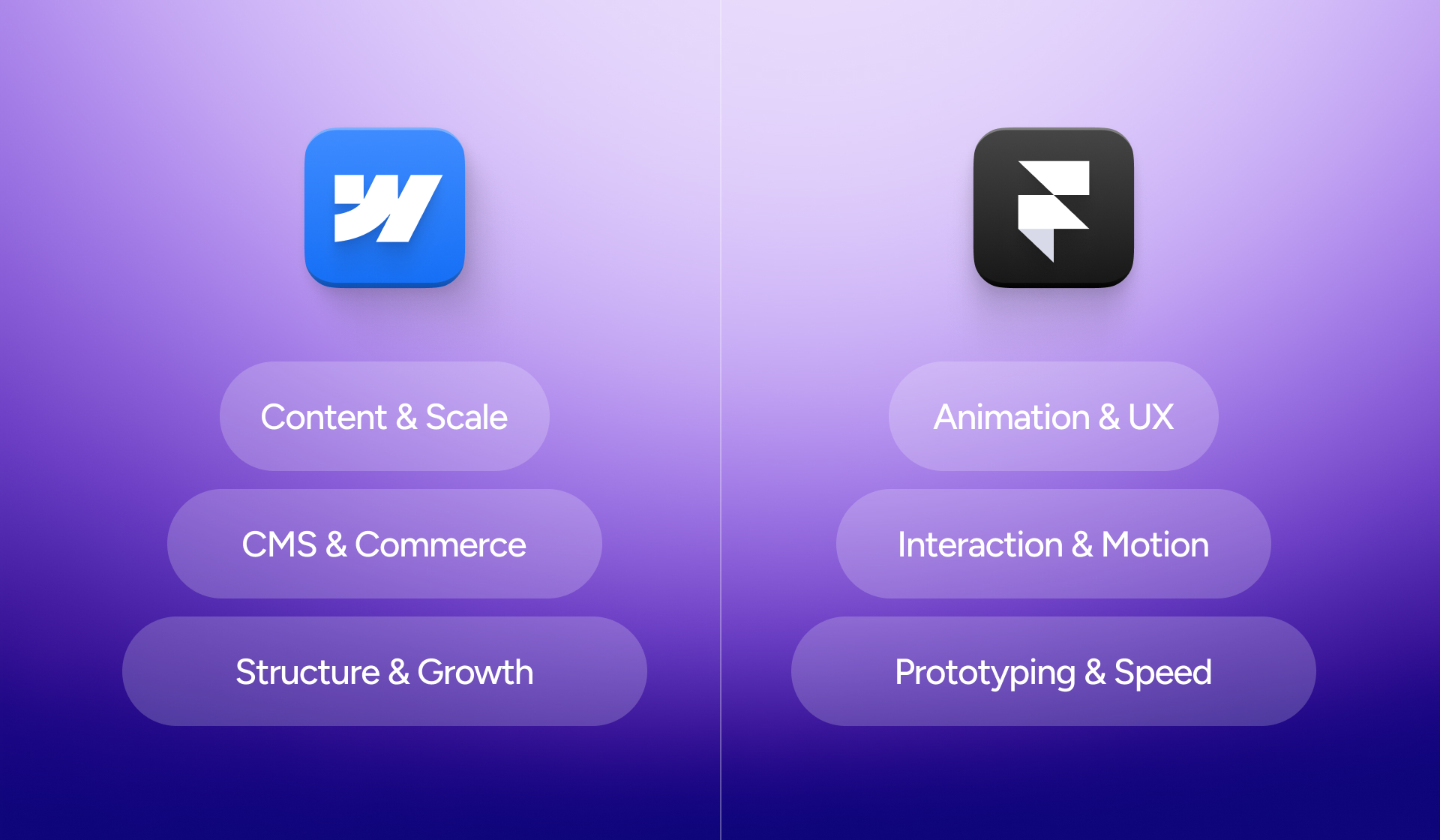
Webflow is more mature and offers fewer technical limitations.
“There were simple things I could do in Webflow that I wasn’t able to do in Framer.”
CMS comparison — Webflow CMS is more robust
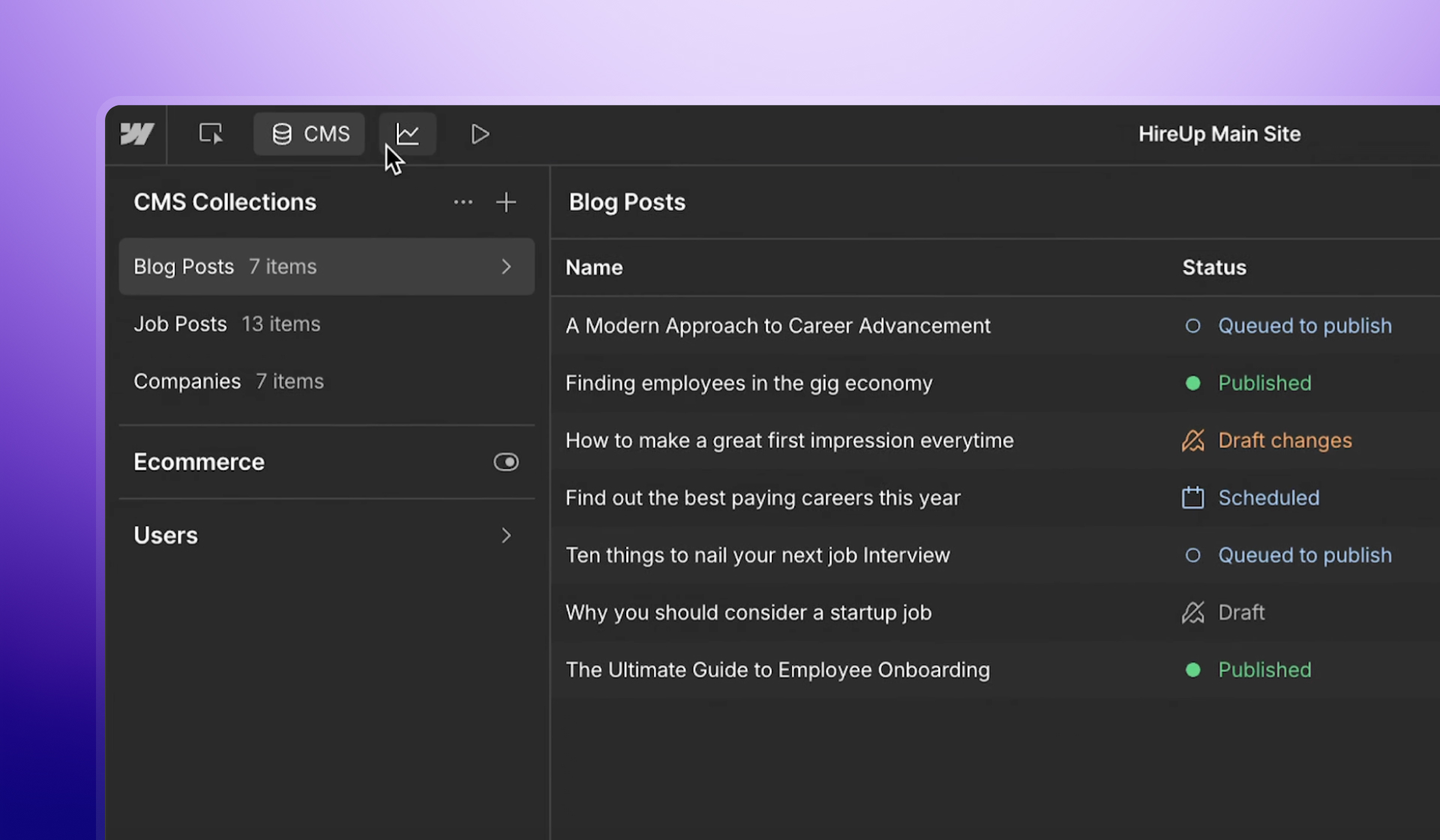
- More field types
- Reference fields
- Embedded code inside CMS items
Animation — Webflow scales better for complex motion
“Animation-heavy websites are easier to build on Webflow.”
Pricing and hosting — mostly similar
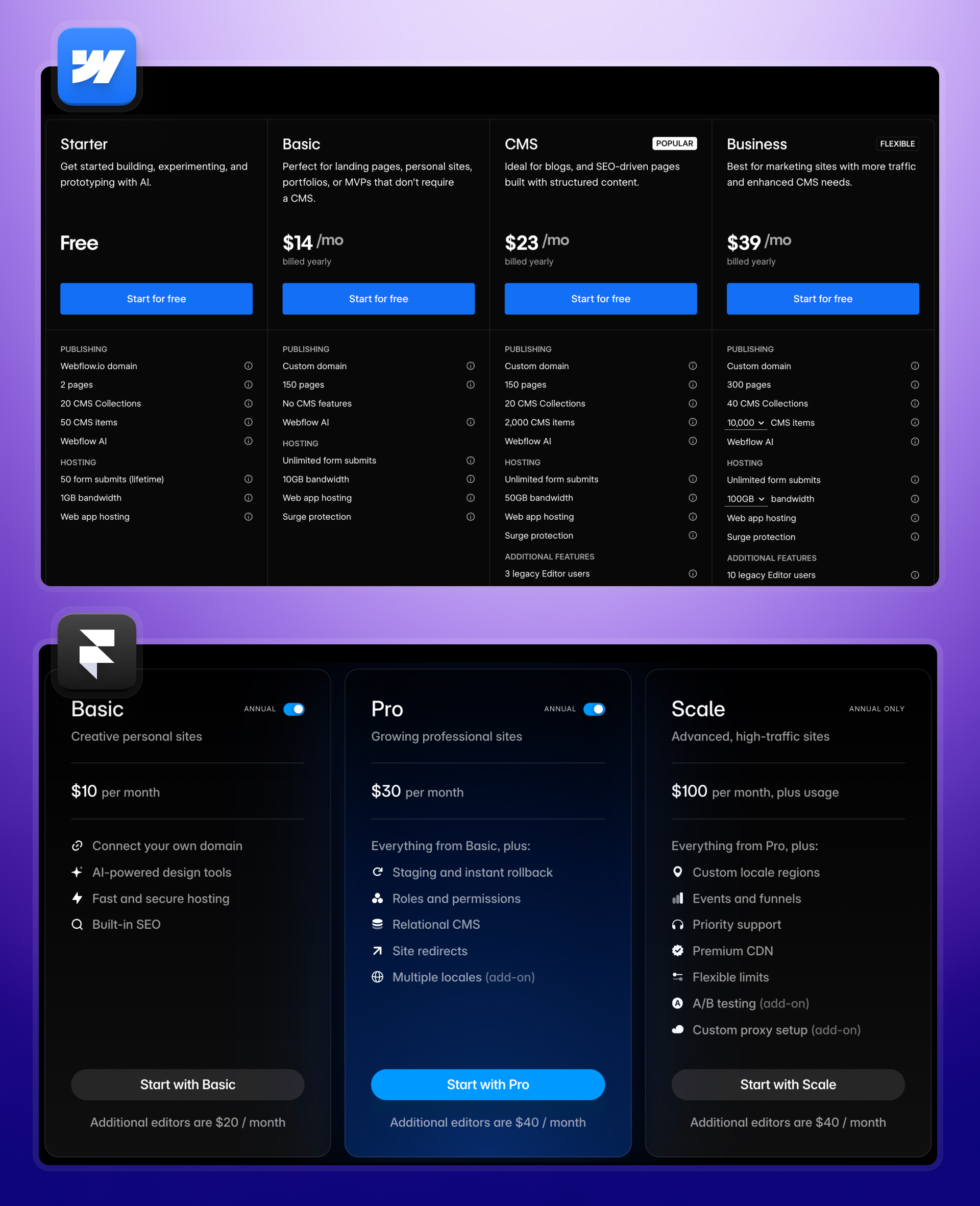
- Both charge per site hosting
- Both charge per team seat
- Similar pricing once CMS is used
Who should use which platform
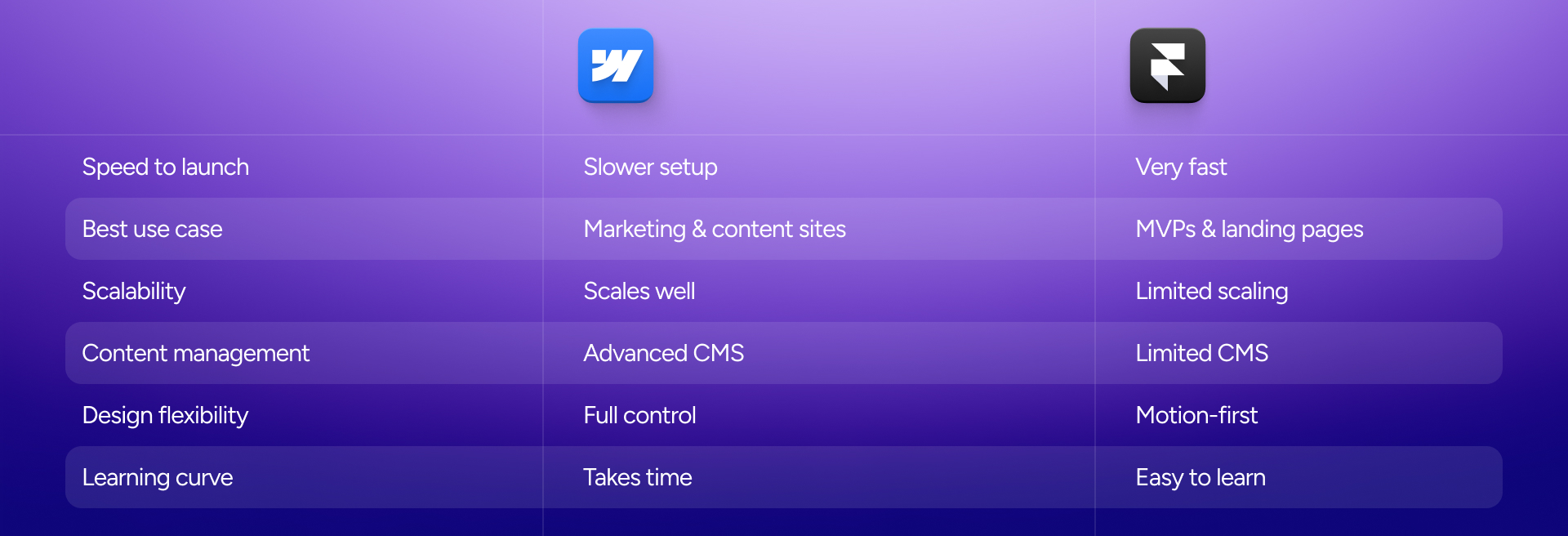
Choose Webflow if:
- You need scalability
- You need a strong CMS
- You build complex or animation-heavy sites
Choose Framer if:
- You are designer-first
- You want speed and simplicity
- You build marketing or portfolio sites
Webflow fits complex, scalable projects. Framer fits fast, design-led builds. The right choice depends on the project and the person building it.
FAQ
Which platform is better for professional websites, not just portfolios?
Both platforms can handle professional websites, but they serve different needs. Webflow is better suited for structured, scalable websites that grow over time—especially when content, SEO, and long-term maintenance matter. Framer works best for visually strong marketing sites where speed and presentation are the main priorities.
Is Webflow or Framer better for agency–client handoff?
For client handoff, Webflow is usually safer. Its CMS and structure make it easier for marketing teams or non-designers to manage content after launch. Framer works well when the studio stays involved or when the site doesn’t require frequent structured updates.
Can Framer or Webflow replace a custom-coded website?
For most marketing websites, yes. Both tools can fully replace custom code for landing pages, brand sites, and content-driven websites. Custom development is usually only required when a project needs complex backend logic or application-level functionality.
Which platform scales better for SEO-focused websites?
SEO success depends more on structure and maintenance than on the tool itself. That said, Webflow is generally easier to scale for SEO-heavy projects because of its CMS depth and structured content approach. Framer can perform well for SEO, but content-heavy growth requires more discipline.
Should startups choose Webflow or Framer for their first website?
If speed and visual impact are the main goals, Framer is often the fastest way to launch. If the website is expected to grow into a long-term brand platform with ongoing content and SEO, starting with Webflow can prevent a costly rebuild later.
Keep reading